

It feels like not so long ago we covered the demises of Dragon and Dungeon magazines, but already we’re back at articles originally published in an officially released periodical. Kind of. Dependent upon your definition of the word periodical. Dragon+ was a (relatively) short-lived magazine/marketing ploy that replaced those magazines in the Fifth Edition era. Think Nintendo Power, but for D&D. From April 2015 to March 2022, it spanned 41 “issues” of wildly varying quality under a few different editors, though largely with Matt Chapman and Bart Carroll at the helm. I’m putting “issues” inside quotation marks because Dragon+ was released entirely online, and if you want to take a look at its content today you’ll have to go to archive.org and wade through pdfs people compiled of the old web pages. Yes, there were official publication dates for these “issues,” and sometimes thematic linkage between articles, but there’s something quite different between a stack of links and a printed work, and only some of this is a result of my own misguided nostalgia.
Even during its heyday, Dragon+ largely felt like ephemeral marketing pablum with weirdly excellent art design, not the full-on game supplement that made its predecessors feel at times like necessary reading for anyone playing D&D. Its legacy is almost nonexistent, certainly compared to its forebears, but that doesn’t mean that it didn’t feature some excellent material, regardless of being hardly remembered even a few years after winding down. During its six year run, not many articles were planar in nature, but there were enough that it warrants checking out the offerings.
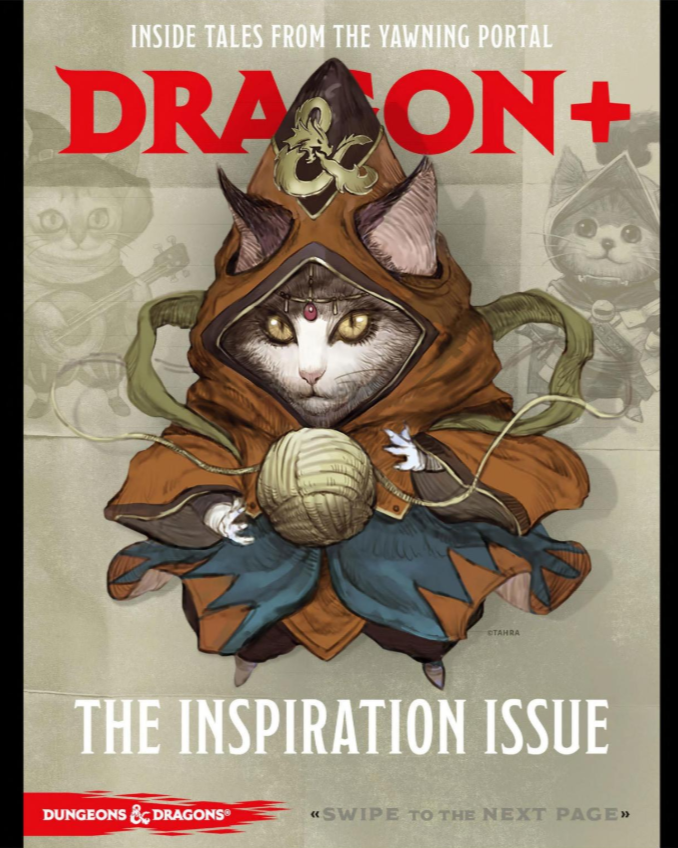
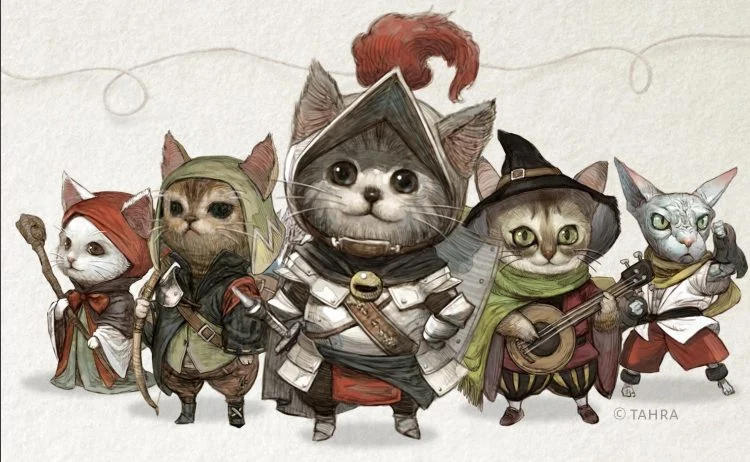
In February 2017’s issue of Dragon+ (#12), we were introduced to perhaps the best planar content since the end of Planescape, and maybe even before then: Tahra’s cats! Tahra, the working name for artist Kyoung Hwan Kim, drew the cover for the issue just because, well, he liked drawing fantasy and cats, so why not combine them? The results are fantastic and adorable, and inspired by this artwork the designer Adam Lee decided to write a story about a new, insane plane he dubbed Catlantis.
“Herding Tahras Cats” (sic.) takes those images and mashes it up with our old friend the Cat Lord. Unfortunately, for reasons unclear to me Lee went with the First Edition one from the Monster Manual II and not the Tony DiTerlizzi’s Planescape one that I spent hours staring at as an adolescent, but I suppose there’s no accounting for taste. Anyhow:
The story goes that the Cat Lord was creating a secret pocket dimension where he could put all the things that he loved. Concurrent with the creation of this world, he built a massive and magnificent city with his divine powers, filling it with mysteries and gold.
Of course, the Cat Lord brought his favorite cat companions along as he worked. He let them run through the city as they wished, playing, catching critters, and loafing about in the sunshine as all cats do. As his cats roamed the city, the Cat Lord left to travel the planes, always returning with more items of wonder. However, since he last left the city untold centuries ago, the Cat Lord has not returned. Over all that time, the world he created was left to transform and evolve.
After the Cat Lord’s departure, some of the cats in the city drifted away, choosing to explore and survive in the wild. They wandered for a time in a world filled with bizarre creatures and sites, all of them pulled from the Cat Lord’s imagination.
Eventually, those cats found a place to call home, and they lived there in caves and tree hollows for many years. But being the Cat Lord’s favorite cats, they were magical in nature, and they began to transform over time into the ancient ancestors of our heroes. Over millennia, these cats became intelligent, developed language and crafts, and eventually built the great Cat Kingdom.
All of this backstory is both plausible (I mean, for me) and adorable, and as such I have no notes. Is any of it really D&D canon? Probably not. But then, on the other hand, I don’t see what’s preventing that, considering that despite Lee’s postulatory tone this is all still being officially published by Wizards of the Coast. As far as I’m concerned, this fantastical and heavenly (again, for me) cat plane is now fully part of the multiverse, the only problem being that I wouldn’t allow anyone to adventure there out of fear that they’d harm the kitties. Yes, this is why I don’t include cats in my fiction, either, and it has been noted in the past that I might not be the most mentally stable of people.
From here, Lee came up with names, story arcs, and even voices for the characters, though this latter contribution would remain in his head. As such, we’re given information about such wonderful folks as Cecil the Minstrel, Greeneye the Pirate, Spencer Tuffington, Tabitha Twitchtail, and even The Great Majikat. Also The Hamster Brothers, who for some reason are also hanging about, presumably because the Cat Lord wanted some prey. There is a lot more to all of this than you might expect, with plots and even subplots surrounding this vast cast of cuties, plus examples for creatures, monsters, cat skills, cat spells and items, and even cat nomenclature, e.g. “Cats refer to other cats as ‘purrrsons,’” which is a bit too cringe even for me but your own mileage may vary. Catlantis is a wonderful place to read about and the fun Lee had while writing this is article palpable. It’s unfortunate we’ve never so much as heard a whisper about Catlantis or Tahra’s cats since this article, but what’s there is surprisingly deep and developed.
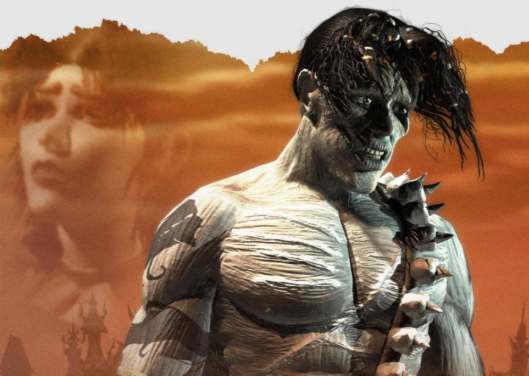
Next up is an article that we covered previously in this column… sort of. In Part 62 of this series from back in August of 2022 (seriously? Oh my god, I’ve been writing these for that long? Just… wow), I focused on an article called “Creatures of Torment,” which profiled four new monsters traipsing around the Outlands. Here’s the thing, though: at the time those creatures almost completely lacked context. Both within Torment and the article they were just four minor oddities. However, that’s because for whatever reason Dragon didn’t publish the short story meant to feature alongside these creatures, which explained them and at the same time detailed a failed expedition into a new location called The Plain of Shale. Rectifying that error, issue 16 of Dragon+ (October 31, 2017) includes that full story, plus the second edition statistics, plus a new swath of fifth edition statistics for these creatures (I linked to these before, but whatever, here it is again simply because it’s a cool resource and finding particular parts of Dragon+ magazine issues on your own is a miserable process given that they’re just compiled, 200+ page-long pdfs with no indexing or proper table of contents). The only thing that’s lacking is new artwork, but this was still an unexpected joy to discover.
The story itself concerns a new group, the Pabulum (an offshoot of the Takers), sending an expedition to the Plain of Shale for reasons eventually revealed to be extremely dangerous. However, the main characters are Bentneck, a bariaur, Xachariah, an archer (human?), and Kaye (also human?), the story’s narrator who joins the journey at the behest of Estevan. Along the way, this group of mages and their escorts meets up with the new monsters: gronks, grilligs, sohmien, and finally trelons, all of whom are revealed to be more interesting than they seemed to me when I covered them previously, for which I should apologize to Mr. Avellone. Ultimately, it’s revealed that the Pabulum are searching for the remains of the mage who created the Plains of Shale in the first place, which isn’t a terribly good idea.
Is this piece of fiction mind-blowing? Hardly. But then, it’s not trying to be, it’s trying to offer fun and exciting context for these new creatures, all of which are worthy additions to Planescape. In this, it’s a wonderful way of highlighting what’s special and unique about each monster, and I truly wish that other creators, whether in the digital space or otherwise, had taken this ball and run with it. Avellone’s tone and language is a perfect fit for Planescape, and it’s a pity that it took until 2017—18 years after the original publication—for any of this to see the light of day. It’s an excellent, quasi-canonical piece of Planescape lore that I can definitely see myself cribbing from for my own adventures.
A much less exciting return of old material came in issue #18, when the Havoc Orb from the very end of Third Edition was updated to Fifth Edition. I’m not complaining, but it’s still a pretty random inclusion.
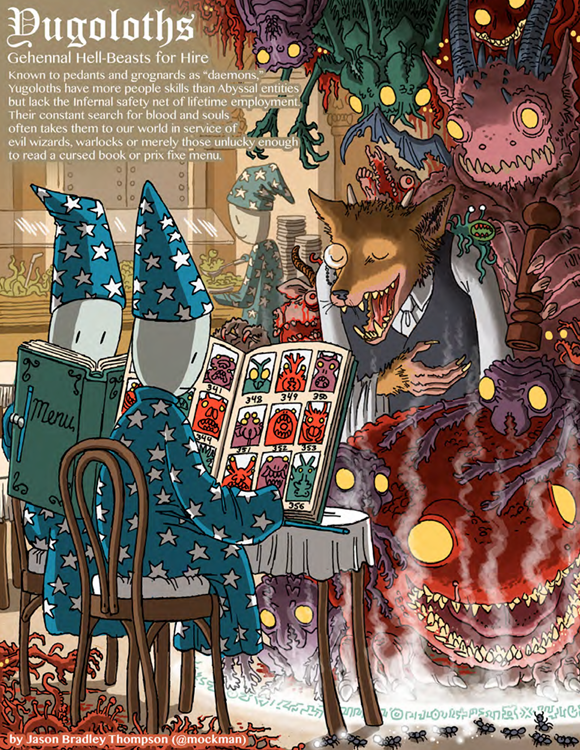
The primary creator of new planar material for Dragon+ ended up being the comic artist Jason Bradley Thompson, aka Mock Man, who throughout much of the magazine’s run contributed comic stylings (“walkthroughs”) of various adventures. Your taste may vary, but these were actually my favorite part of the magazine during its run, as they acted as both loving homages and light parodies of the works they covered. Unfortunately, when the magazine died off, Thompson stopped making these for obvious reasons, and his Mockman Press freelance efforts in general seem to have died off (it seems that he’s working on both the design and artwork for the Dreamland RPG instead, which looks like a very cool project soon coming to fruition), but you can still purchase full prints of some of these walkthroughs on his old website.
Anyhow, amongst Thompson’s other fabulous creations were a comic about yugoloths in issue #20, some magic items to accompany a reprint of it in issue #22, a comic detailing a journey through Hell for issue #28, and a really sweet planar adventure I’ll be detailing in great length below in issue #21. Neither of the comics are necessary reading, but both are fun, well-crafted works, the only demerit for which is that it uses Fifth Edition version of the oinoloth, not that this comes as much of a surprise. You can skip them entirely if you’re not into somewhat grim jokes about fiends, but also, if you’re not into that sort of thing, what are you doing reading this blog? The magic items are mostly drawn from the adventure, but there are also a couple other goofy items worth reading about, including the artifact-level powerful Staff of the Lower Planes.
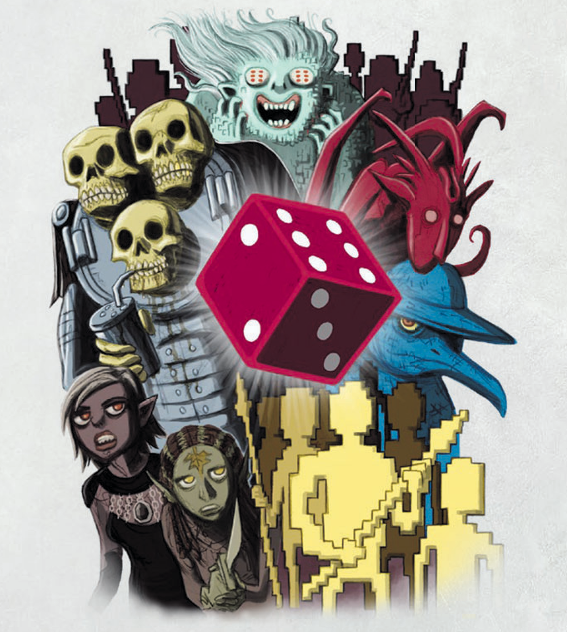
As for that adventure, “Six Faces of Death” is the type of well-designed, epic adventure that we would’ve salivated over during the heyday of Dungeon. It features a unique hook, NPCs with relevant motivations who can be manipulated (but not in an abusive way), and a strong use of “Gygaxian Naturalism” that accounts for pretty much everything you’ll encounter. In essence, if you can accept its far-fetched concept, everything else fits seamlessly. While I would not really want to run it myself, simply because of just how much is going on here, under a committed DM it looks like a memorable and challenging experience that will hit most any old school fan’s sweet spots. That it’s not actually a planar adventure, taking place in Faerun as it does, is something I’m not holding against it, either, given that its structure is entirely derived from the planar cosmology in a way that would likely befuddle most Forgotten Realms fans.
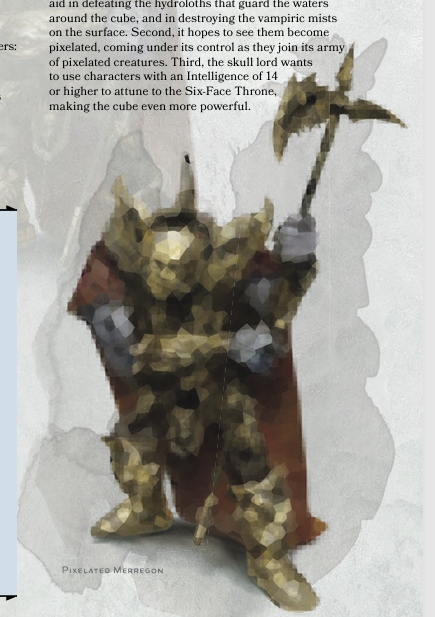
Onto the actual premise, which as I said above is kind of a lot. One of the cubes in Acheron also happened to serve as a mad wizard’s prison and laboratory (said wizard worships Bane, though that’s barely relevant). Three individuals who tried to stage a coup against said mad wizard went about this by combining into a three-headed skull lord, which is somehow more relevant as it creates the adventure’s ultimate big bad, though how much players will ever learn about this is questionable. In the meantime, a mere quadrone arrived on this cube and “was corrupted by the magic of Acheron to develop a heretofore unheard-of power: the ability to control other beings and make them into creatures like itself.” This quadrone acts as a sort of gray goo-esque source for the “pixelating curse—a magical malady that transforms creatures and objects into lawful neutral cube creatures serving the dictates of the Archquadrone,” which is the name this now-renegade quadrone gave itself. The curse infected the rest of the cube and took down the evil wizard who ruled it. Others in Acheron noticed this disaster, and as a result devils and yugoloths used the River Styx to “cleanse both the memories of the dead and the curse that infected them.” But before they could succeed, the Archquadrone tore a planar rift that sent the cube down into the Material Plane, landing it right smack in the middle of the Sea of Swords in western Faerun. Since then, the cube has been a weird, heavily rumored island that no one has been able to deal with. Both modrons and yugoloths are still hoping to stop its curse from spreading, but it will be up to our intrepid PCs to actually get the job done.
That’s a crazy amount of backstory for what ultimately amounts to a dungeon crawl, but it’s also necessary for explaining such an extremely complicated environment to set a dungeon within. This cube, henceforth to be called Cube 1717, regularly rotates, and each of its six faces has wildly different hazards. Some of the rumors about Cube 1717 have resulted from this rotation, such that locals call it The Changing Island because of how conflicting descriptions of it have been. “Some say that the island is nothing but bare stone, featuring terraces of sharp, angular rock in white, red, black, and bronze. Others have talked of the island appearing as a pleasant green atoll of palm trees and plant life, with sandy beaches.” Half of this adventure consists of PCs figuring out how to get inside of the cube at all, as there is a standard orientation within the cube and PCs will need to find the entrance that leads to it. As a result, depending upon player interest and Dungeon Master sadism, you might witness a lot or a little of the cube’s outside faces, which despite their small sizes do offer a ton of variation.
Given that this is a high level adventure, one of your immediate questions is going to be, “What’s preventing the PCs from using ridiculous spells to bypass these obstacles?” (a question that I wish was asked by far more module designers). Turns out, quite a bit. Infinitely reproducing vampiric mists fight anyone who tries to fly off the island, and “the cube’s infernal magic prevents creatures from leaving the island by the use of [teleportation] without the permission of the cube’s owner.” The cube is also surrounded by Styx water (plus a group of hydroloths), and anything that isn’t soaked with it gets immediately wracked with the Pixellating Curse itself. Oh yeah, that little thing is going to be causing some issues, as unless doused with Styx water, everyone on Cube 1717 is going to be making regular saving throws against infection, and even if they are having a good time splashing around with Styx water that obviously has its own drawbacks. Once this curse goes far enough, PCs turn into lawful neutral NPCs trying to spread the good word of pixels (well, voxels, but I don’t fault anyone for failing to know that obscure term) to everyone else in the multiverse.
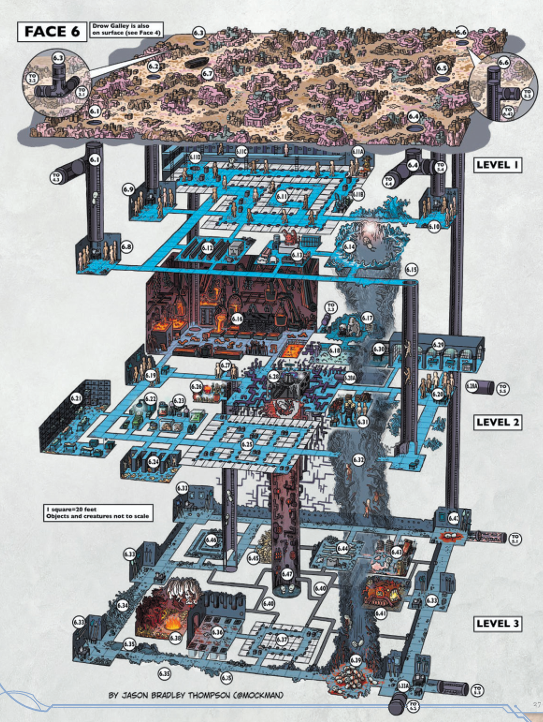
Those cube faces have a lot for players to explore between periodic rotations to the surface, during which periods they’ll be frantically trying not to get drowned. A drow galley floats nearby, while a shadar-kai galley is anchored to one face of the cube. Most of the cube’s faces are largely pixellated from their curse exposure, but one is coated in a lush green jungle. Each face is given its own map, plus descriptions for how to run areas like the corpse flower garden, junkyard, and clockwork congregation.
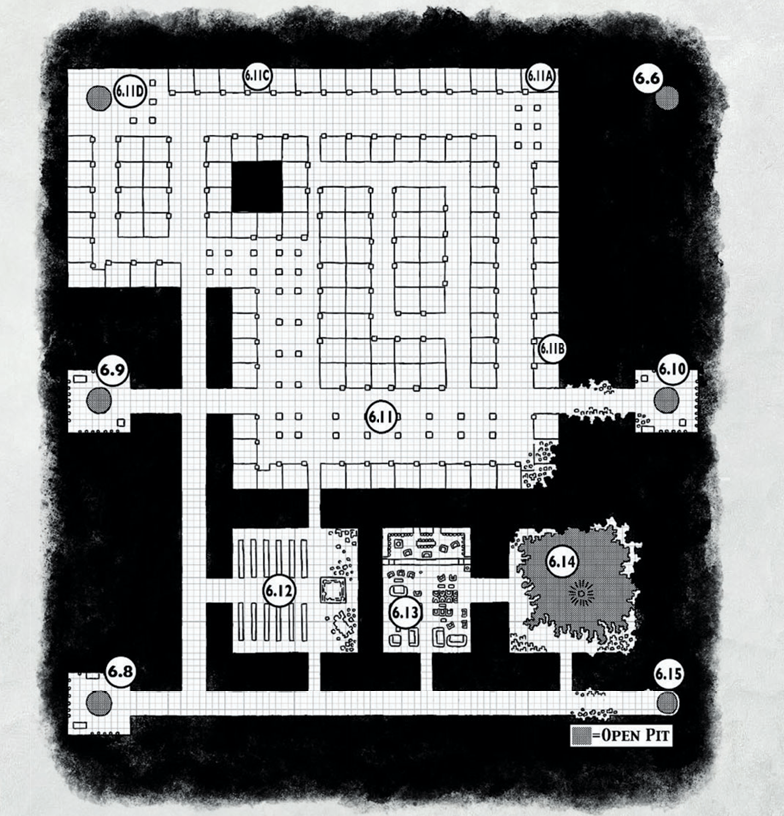
Cube 1717’s final face, the “Face of Evil,” is aligned with the interior’s gravity and most likely how players make their way inside. This is a complicated dungeon, filled with interesting NPC’s and traps aplenty. It’s possible players try to talk their way through problems, as there are multiple factions vying for supremacy but I doubt that will lead far, as almost all of the evil NPCs are, in fact, evil and will betray players at the opportune moment. In total, it’s about 40 rooms split over three levels, making for a good-sized dungeon but not a megacrawl that consumes an entire campaign. And while a lot of the dungeon is devoted more to its pixelation ideas and gravitational oddities, there are still some planar bits of note, my favorite part being that as part of Acheron, Cube 1717 is still receiving petitioners… most of whom perish immediately because the cube is rarely pointing in the right direction, and as a result they immediately fall 200 feet to their deaths. What’s more, it’s a non-linear dungeon, even featuring pipes that players can slip through to avoid some of the hazards. In general, though, there are pros and cons to most approaches, and the author cleverly considers possible drawbacks except for the use of Etherealness. In all it’s a hell of a dungeon.
Ultimately, “The Six Faces of Death” isn’t just a good piece of planar-ish content, it’s one of the best things that magazine ever published and certainly an adventure more people should be aware of. I have some tiny quibbles with its situation, most of which is frustration with using Fifth Edition’s bastardized oinoloth and the weirdness of making a quadrone this powerful, but considering that the author only used monsters from Mordenkainen’s Tome of Foes this adventure is doubly impressive. And if you want to keep this adventure planar, there’s no reason why Cube 1717 needed to land in the Prime, making it imminently adaptable and a fun way to spice up some of the more boring Upper Planes (if I ever get a high enough level group together, it’ll land smack into the middle of Bytopia).
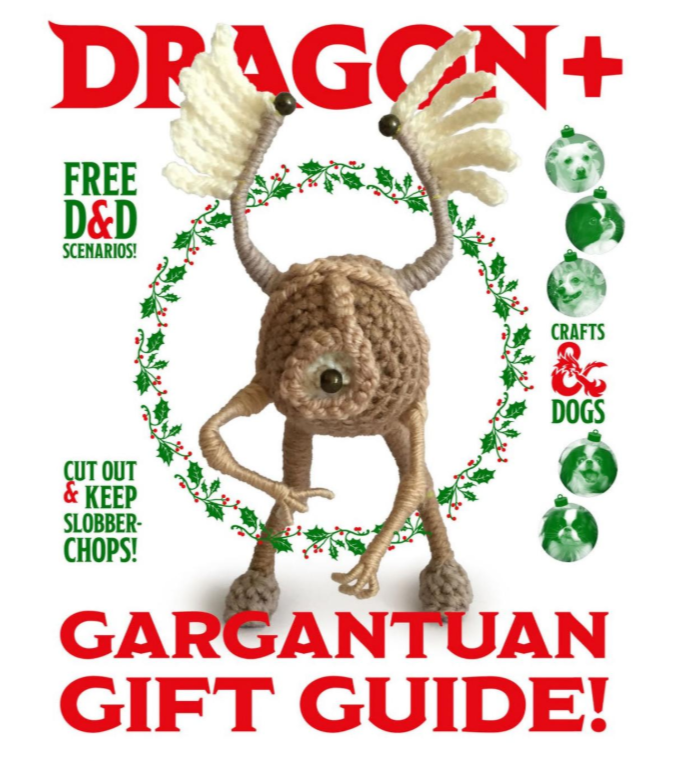
There are two final bits of planar material before the magazine ended. First, there was a yarn modron on the cover of issue #29, which doesn’t really add anything to the game but is still a neat random decision. Cool. Just as random but far meatier was an article in Dragon+ #37, in the short-lived (because at this point so was the “magazine”) Character Spotlight: NPCs series. And if you’re curious why my language around this is so strained, the article itself doesn’t really have a name, it’s just titled after the series—Dragon+ was dumb like that. Artist Max Dunbar and author Adam Lee worked together on a couple of “Shadow Monk” NPC’s, whose monastery is “dedicated to the study of the Negative Plane of existence.” While this monastery isn’t itself located on the Negative Energy Plane, this article still planar enough to be of interest, especially for campaigns based on, or transitioning away from, the Prime.
Let’s start with the monastery’s backstory:
Eons ago, Urd, a lich monarch of the Negative Plane, left his crumbling tower and wormed his way onto the Material Plane. His plan was to bring forth a terrible entity known as a nightwalker and wreak havoc on the living. The lich had in his possession an ancient chart of planar motions, which foretold of a cosmic cycle that would bring the Negative Plane, the Shadowfell, and the Material Plane into alignment. From this chart, he knew the time and place where a bridge could be created, and a nightwalker could be summoned.
With the help of his undead minions, the lich built a monastery on a desolate altiplano within the Material Plane. There, he interred his library of arcane knowledge, known as the Litany of Urd, etching powerful sigils of necrotic magic into the surrounding earth and rock. This turned the area itself into a potent magical nexus that called to the nightwalker. The monastery became an omphalos, designed to observe celestial patterns and provide the exact time when the bridge from the Negative Plane could be made manifest. The lich lord was successful. The planes aligned and a nightwalker crossed the shadow bridge, lured by the energy of the living, to be unleashed on the material world. For an age, there was darkness and misery as the nightwalker brought pestilence, famine, and death to the region, but the forces of goodness gathered and struck back, banishing the nightwalker and hunting down the lich lord.
Centuries have now passed, and all of this history has faded into myth. The monastery is now cared for by an order of undead monks named the Order of Shadows, who likewise named their base the Monastery of Shadows because they’re noted for creativity. Oddly, the article soon tells us that these monks can be either good or evil, depending upon the DM’s needs. In either case, they hope to resummon the location’s favorite nightwalker, but the ends they have in mind are wildly divergent. I don’t love this concept, as to me it causes unnecessary problems and weakens the stories behind the Order of Shadows, though I understand the intent.
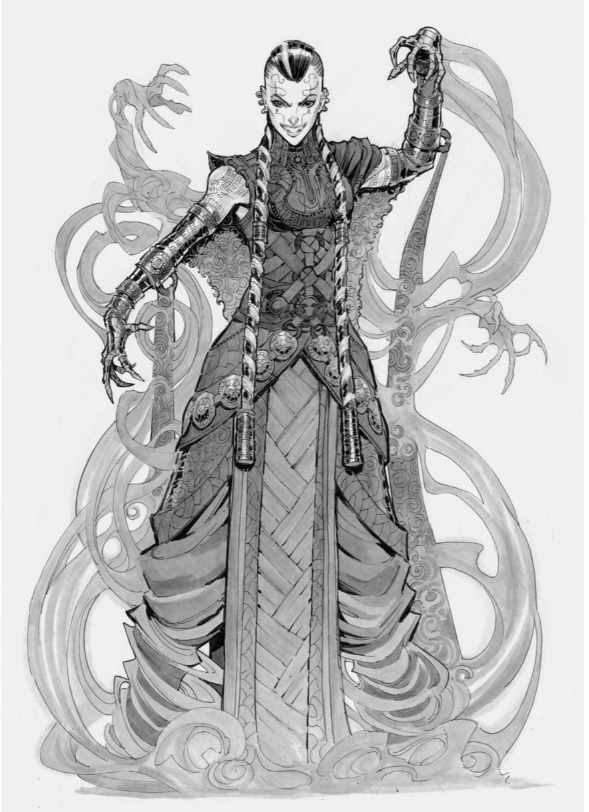
Following some suggestions for how DM’s might want to run the Negative Plane, all of which are milquetoast, and a statblock for necromancer NPCs, we move into items used by the monks. And a “Using the Monks in Your Game” section. And then a stablock for generic shadow monks. At this point we’re nine pages (when people PDF-ed this article) into things and still the titular NPCs are yet to be covered.
Finally we’re introduced to Zashtii, the only proper NPC from this article theoretically focused on NPCs and she’s… fine. She’s a devout monk who committed herself to undeath and bound herself to a pair of bracers. And that’s kind of it. All of this article was largely leading up to her, and she’s pretty unmemorable, perhaps as a result of needing to be good, bad, or anywhere between dependent upon what DMs might need. Also included is a write-up of the monastery’s nightwalker Malthraxis, who is, umm, a nightwalker stuck in the Negative Energy Plane, and that’s mostly it. Malthrix also “has tendrils of thick smoke that endlessly cascade from its body,” the result of souls it’s devoured, but on the whole I was unimpressed. Malthraxis is more interesting than typical Fifth Edition nightwalkers, but that’s mostly just because monster statistics in this edition are always pretty bland.
Dragon+ magazine continued on for another half a year after this point, but was summarily killed around the period of time that Hasbro decided to strip out all of the game’s marketing, community outreach, and goodwill. While the magazine was mostly corporate propaganda, it was still nice to have, and you felt that there was a lot of love given to it by its contributors despite its fannish approach to content. Reading through it today, Dragon+ feels like it’s from a very different era even though we’re still nominally within the current edition of the game. We didn’t get a lot of deep content from the “magazine,” but its existence put a friendly face on the game and helped make it feel part of a generally receptive and welcoming atmosphere towards players, one that no longer exists today.


